The following information is used for educational purposes only.
29 de junio Día del Sumo Pontífice
El 29 de junio la Iglesia celebra la Solemnidad de San Pedro y San Pablo, en este día se festeja el día del Sumo Pontífice en recuerdo del sucesor de San Pedro, primer Papa de la historia y vicario de Cristo en la Tierra. El papado tiene su origen en los Evangelios, donde Jesús constituye a su apóstol Pedro como cabeza visible de su Iglesia.
ORACIÓN POR EL PAPA
Oh Jesús, Rey y Señor de la Iglesia: renuevo en tu presencia mi adhesión incondicional a tu Vicario en la tierra, el Papa. En él Tú has querido mostrarnos el
camino seguro y cierto que debemos seguir en medio de la desorientación, la inquietud y el desasosiego.
Creo firmemente que por medio de él Tú nos gobiernas, enseñas y santificas, y bajo su cayado formamos la verdadera Iglesia: una, santa, católica y apostólica.
Concédeme la gracia de amar, vivir y propagar como hijo fiel sus enseñanzas. Cuida su vida, ilumina su inteligencia, fortalece su espíritu, defiéndelo de las
calumnias y de la maldad. Aplaca los vientos erosivos de la infidelidad y la desobediencia, y concédenos que, en torno a él, tu Iglesia se conserve unida, firme
en el creer y en el obrar, y sea así el instrumento de tu redención. Amén
Fuente: www.consudec.net/Google Images
Saturday, June 29, 2013
GRALINT/THE WORLD- MY WORLD2015 Survey (United Nations)
The following information is used for educational purposes only.
Vote for the changes that would make the most difference to your world
The United Nations and partners want to hear from YOU!
MY World is a global survey asking you to choose your priorities for a better world.
Results will be shared with world leaders in setting the next global development agenda.
Tell us about the world you want, because your voice matters..
Which of these are most important for you and your family?
Choose 6
click for details
check to vote.
Better healthcare .
Affordable and nutritious food .
Access to clean water and sanitation .
Better job opportunities .
Action taken on climate change .
Phone and internet access .
Support for people who can’t work .
A good education .
Protection against crime and violence .
Political freedoms .
Freedom from discrimination and persecution .
Better transport and roads .
An honest and responsive government .
Equality between men and women .
Protecting forests, rivers and oceans .
Reliable energy at home .
Suggest a priority (optional).
Lastly, please tell us a little about yourself.
Your votes will remain anonymous, but this basic data will help us understand you better.
I am gender Male Female, age
and live in country
My education level is education Some primary Finished primary Finished secondary Beyond secondary
By filling this out, I pledge that this is my single vote in the MY World global survey.
I will not vote more than once. .
My Priorities
0/6
Select 6 more
About MY World
MY World is a United Nations global survey for citizens. Working with partners, we aim to capture people’s voices, priorities and views, so world leaders can be
informed as they begin the process of defining the next set of global goals to end poverty.
To join the global conversation and post-2015 debate go to:
This initiative has been developed by:
United Nations
World Wide
Web Foundation
Overseas Development
Institute
Ipsos Mori
With the support of partners across the world -
See more at: http://www.myworld2015.org/#sthash.sVC48UZW.dpuf
********************************************************************************************************************************
¿Qué cambiarías para mejorar el mundo?
La ONU propone una encuesta interactiva para delinear la agenda de desarrollo después de 2015; cómo participar.
Combatir el hambre, la prioridad de los Objetivos de Desarrollo del Milenio que vencen en 2015. Foto: AFP
El trabajo, la educación, el acceso a las tecnologías o a la salud. Estas son algunas de las opciones que ofrece la Organización de las Naciones Unidas (ONU) en el menú de posibles prioridades de los ciudadanos del mundo, que serán contempladas en la creación de una nueva agenda global.
A través de la encuesta Mi Mundo 2015, que se puede contestar por Internet, la ONU se basa en la interactividad para crear, en conjunto con ciudadanos de todo el mundo, la agenda de desarrollo para usar de guía después de 2015, año en que vence el plazo de los Objetivos de Desarrollo del Milenio fijados al comienzo de la década pasada.
"El objetivo es captar la opinión, las prioridades y los puntos de vista de la ciudadanía e informar a los líderes mundiales, en el marco de definición de la nueva agenda global de la lucha contra la pobreza en el mundo", explican desde el organismo multilateral en el sitio oficial de la encuesta.
El proceso para emitir la opinión de cada uno es simple. Las personas deberán elegir seis ámbitos de actuación -de un total de 16- que, para ellos, supondrían una mayor prioridad en el objetivo de mejorar su calidad de vida. La encuesta es anónima, por lo que al finalizar el proceso, sólo hay que ingresar el género, la edad y la nacionalidad.
Las 16 opciones fueron elaboradas a partir de las prioridades expresadas en investigaciones y encuestas anteriores por las poblaciones más carenciadas del planeta, y de las informaciones provenientes de los debates técnicos y políticos sobre la futura agenda de lucha contra la pobreza.
Además de completar el formulario por Internet, la encuesta puede realizarse por teléfono, mensajes de texto o incluso en papel, gracias al apoyo de una extensa red de organizaciones de base, organizaciones religiosas, grupos de juventud, entidades del sector privado y ONG's colaboradoras que la ONU desplegó alrededor del globo.
En la Argentina, particularmente, se cuenta con el apoyo de la Organización Argentina de Jóvenes por Naciones Unidas (Oajnu), así como el de Mediacom, su principal socio a nivel global para comunicaciones.
¿Qué hacen con las respuestas?
En primera instancia, los resultados de esta encuesta serán enviados al Grupo de Alto Nivel del Secretario General para la agenda de desarrollo post-2015, de cara al informe que este grupo presentará al Secretario General de las Naciones Unidas en junio de 2013.
Esto no significa, no obstante, el final del proyecto. Posteriormente, Mi Mundo continuará recopilando opiniones ciudadanas y los resultados se compartirán con el Secretario General y los líderes mundiales en el proceso de preparación de la próxima agenda de desarrollo..
Para participar de la encuesta entrá a: http://www.myworld2015.org/?lang=es
Fuente: www.lanacion.com.ar
Vote for the changes that would make the most difference to your world
The United Nations and partners want to hear from YOU!
MY World is a global survey asking you to choose your priorities for a better world.
Results will be shared with world leaders in setting the next global development agenda.
Tell us about the world you want, because your voice matters..
Which of these are most important for you and your family?
Choose 6
click for details
check to vote.
Better healthcare .
Affordable and nutritious food .
Access to clean water and sanitation .
Better job opportunities .
Action taken on climate change .
Phone and internet access .
Support for people who can’t work .
A good education .
Protection against crime and violence .
Political freedoms .
Freedom from discrimination and persecution .
Better transport and roads .
An honest and responsive government .
Equality between men and women .
Protecting forests, rivers and oceans .
Reliable energy at home .
Suggest a priority (optional).
Lastly, please tell us a little about yourself.
Your votes will remain anonymous, but this basic data will help us understand you better.
I am gender Male Female, age
and live in country
My education level is education Some primary Finished primary Finished secondary Beyond secondary
By filling this out, I pledge that this is my single vote in the MY World global survey.
I will not vote more than once. .
My Priorities
0/6
Select 6 more
About MY World
MY World is a United Nations global survey for citizens. Working with partners, we aim to capture people’s voices, priorities and views, so world leaders can be
informed as they begin the process of defining the next set of global goals to end poverty.
To join the global conversation and post-2015 debate go to:
This initiative has been developed by:
United Nations
World Wide
Web Foundation
Overseas Development
Institute
Ipsos Mori
With the support of partners across the world -
See more at: http://www.myworld2015.org/#sthash.sVC48UZW.dpuf
********************************************************************************************************************************
¿Qué cambiarías para mejorar el mundo?
La ONU propone una encuesta interactiva para delinear la agenda de desarrollo después de 2015; cómo participar.
Combatir el hambre, la prioridad de los Objetivos de Desarrollo del Milenio que vencen en 2015. Foto: AFP
El trabajo, la educación, el acceso a las tecnologías o a la salud. Estas son algunas de las opciones que ofrece la Organización de las Naciones Unidas (ONU) en el menú de posibles prioridades de los ciudadanos del mundo, que serán contempladas en la creación de una nueva agenda global.
A través de la encuesta Mi Mundo 2015, que se puede contestar por Internet, la ONU se basa en la interactividad para crear, en conjunto con ciudadanos de todo el mundo, la agenda de desarrollo para usar de guía después de 2015, año en que vence el plazo de los Objetivos de Desarrollo del Milenio fijados al comienzo de la década pasada.
"El objetivo es captar la opinión, las prioridades y los puntos de vista de la ciudadanía e informar a los líderes mundiales, en el marco de definición de la nueva agenda global de la lucha contra la pobreza en el mundo", explican desde el organismo multilateral en el sitio oficial de la encuesta.
El proceso para emitir la opinión de cada uno es simple. Las personas deberán elegir seis ámbitos de actuación -de un total de 16- que, para ellos, supondrían una mayor prioridad en el objetivo de mejorar su calidad de vida. La encuesta es anónima, por lo que al finalizar el proceso, sólo hay que ingresar el género, la edad y la nacionalidad.
Las 16 opciones fueron elaboradas a partir de las prioridades expresadas en investigaciones y encuestas anteriores por las poblaciones más carenciadas del planeta, y de las informaciones provenientes de los debates técnicos y políticos sobre la futura agenda de lucha contra la pobreza.
Además de completar el formulario por Internet, la encuesta puede realizarse por teléfono, mensajes de texto o incluso en papel, gracias al apoyo de una extensa red de organizaciones de base, organizaciones religiosas, grupos de juventud, entidades del sector privado y ONG's colaboradoras que la ONU desplegó alrededor del globo.
En la Argentina, particularmente, se cuenta con el apoyo de la Organización Argentina de Jóvenes por Naciones Unidas (Oajnu), así como el de Mediacom, su principal socio a nivel global para comunicaciones.
¿Qué hacen con las respuestas?
En primera instancia, los resultados de esta encuesta serán enviados al Grupo de Alto Nivel del Secretario General para la agenda de desarrollo post-2015, de cara al informe que este grupo presentará al Secretario General de las Naciones Unidas en junio de 2013.
Esto no significa, no obstante, el final del proyecto. Posteriormente, Mi Mundo continuará recopilando opiniones ciudadanas y los resultados se compartirán con el Secretario General y los líderes mundiales en el proceso de preparación de la próxima agenda de desarrollo..
Para participar de la encuesta entrá a: http://www.myworld2015.org/?lang=es
Fuente: www.lanacion.com.ar
Friday, June 28, 2013
GralINt-El Papa Francisco/Pope Francis
The following information is used for educational purposes only.
Presentations-10 Powerful Body Language Tips for your Presentation-22slides
The following information is used for educational purposes only.
Source: www.slideshare.net
Monday, June 24, 2013
GRalINt/BUS-Presentations: 23 Sure-Fire Ways To Improve Your Presentations
The following information is used for educational purposes only.
23 Sure-Fire Ways To Improve Your Presentations
I've had repeated requests for a checklist of techniques to make presentations more effective. Here's that list, along with links to Sales Machine posts that have more detailed suggestions and a step-by-step method.
BEFORE YOU START RULE #1: Research your audience's preconceptions, desires and fears. Why: Every audience has its unique driver.
RULE #2: Focus on the decision you want the audience to make. Why: That's why you're giving a presentation.
RULE #3: Compile information that has emotional punch. Why: Decision making is an emotional act, justified by facts.
RULE #4: Eliminate opinions that can't be backed with quantifiable facts. Why: Opinions simply tell the audience you're opinionated.
RULE #5: Build a story, ideally with the audience as the heroes. Why: Your audience are interested in themselves, not you or your firm.
RULE #6: Plan to build a presentation that is half as long as you first think it should be. Why: Most presentations are WAY too long.
WHEN YOU BUILD YOUR SLIDES RULE #7: Use a simple, single color background for your slides. Why: a busy background distracts the audience from your message.
RULE #8: Use large fonts in simple faces (like Ariel); avoid boldface, italics and UPPERCASE. Why: small fonts in funny faces are hard to read.
RULE #9: If you must use clip art, buy the high quality stuff, not the junky free crap. Why: Cheap clip art makes your presentation look cheap.
RULE #10: Use the minimum amount of visuals that you need to tell your story. Why: Do you want them to remember your story or your slides?
RULE #11: Exclude complex graphics and/or highlight the data point that's important. Why: complicated slides confuse people.
BEFORE YOU PRESENT RULE #12: Think through the emotional impact of EVERY slide; remove the overly controversial. Why: you don't want a discussion that goes down
a rat hole.
RULE #13: Review your presentation with a colleague to make sure that it's appropriate. Why: This will weed out the irrelevant material.
RULE #14: Check, then double-check, the equipment setup, before you present. Why: Do you really want to spend five minutes fiddling with the microphone?
RULE #15: Rehearse, rehearse, rehearse. Why: Mentally walking through the presentation will make it seem more natural when you really do present.
RULE #16: Avoid presenting at the end of the day, the end of the week, right before a holiday, or after bad news. Why: Your audience won't be able to focus on your story.
WHEN YOU PRESENT RULE #17: Never spend more than one minute introducing yourself or your firm. Why: The audience simply doesn't care, frankly.
RULE #18: Never read from your slides; instead use them to reinforce your message. Why: your audience aren't toddlers who need to be read to.
RULE #19: Never present the same material to the same audience twice, except in brief summary. Why: people tune out stuff they already know.
RULE #20: Avoid jargon, buzzwords and biz blab. Why: if you don't, you end up sounding like an unimaginative jackass.
RULE #21: Don't skip around. Why: On-the-fly improvising makes you look unprepared and scatterbrained.
RULE #22: Unless you've got real skills as a comedian, don't tell jokes. Why: Nothing kills a presentation faster than polite laughter.
RULE #23: Prepare some questions for the question/answer slide. Why: You may need them to get the ball rolling.
By Geoffrey James
Source: www.cbsnews.com
23 Sure-Fire Ways To Improve Your Presentations
I've had repeated requests for a checklist of techniques to make presentations more effective. Here's that list, along with links to Sales Machine posts that have more detailed suggestions and a step-by-step method.
BEFORE YOU START RULE #1: Research your audience's preconceptions, desires and fears. Why: Every audience has its unique driver.
RULE #2: Focus on the decision you want the audience to make. Why: That's why you're giving a presentation.
RULE #3: Compile information that has emotional punch. Why: Decision making is an emotional act, justified by facts.
RULE #4: Eliminate opinions that can't be backed with quantifiable facts. Why: Opinions simply tell the audience you're opinionated.
RULE #5: Build a story, ideally with the audience as the heroes. Why: Your audience are interested in themselves, not you or your firm.
RULE #6: Plan to build a presentation that is half as long as you first think it should be. Why: Most presentations are WAY too long.
WHEN YOU BUILD YOUR SLIDES RULE #7: Use a simple, single color background for your slides. Why: a busy background distracts the audience from your message.
RULE #8: Use large fonts in simple faces (like Ariel); avoid boldface, italics and UPPERCASE. Why: small fonts in funny faces are hard to read.
RULE #9: If you must use clip art, buy the high quality stuff, not the junky free crap. Why: Cheap clip art makes your presentation look cheap.
RULE #10: Use the minimum amount of visuals that you need to tell your story. Why: Do you want them to remember your story or your slides?
RULE #11: Exclude complex graphics and/or highlight the data point that's important. Why: complicated slides confuse people.
BEFORE YOU PRESENT RULE #12: Think through the emotional impact of EVERY slide; remove the overly controversial. Why: you don't want a discussion that goes down
a rat hole.
RULE #13: Review your presentation with a colleague to make sure that it's appropriate. Why: This will weed out the irrelevant material.
RULE #14: Check, then double-check, the equipment setup, before you present. Why: Do you really want to spend five minutes fiddling with the microphone?
RULE #15: Rehearse, rehearse, rehearse. Why: Mentally walking through the presentation will make it seem more natural when you really do present.
RULE #16: Avoid presenting at the end of the day, the end of the week, right before a holiday, or after bad news. Why: Your audience won't be able to focus on your story.
WHEN YOU PRESENT RULE #17: Never spend more than one minute introducing yourself or your firm. Why: The audience simply doesn't care, frankly.
RULE #18: Never read from your slides; instead use them to reinforce your message. Why: your audience aren't toddlers who need to be read to.
RULE #19: Never present the same material to the same audience twice, except in brief summary. Why: people tune out stuff they already know.
RULE #20: Avoid jargon, buzzwords and biz blab. Why: if you don't, you end up sounding like an unimaginative jackass.
RULE #21: Don't skip around. Why: On-the-fly improvising makes you look unprepared and scatterbrained.
RULE #22: Unless you've got real skills as a comedian, don't tell jokes. Why: Nothing kills a presentation faster than polite laughter.
RULE #23: Prepare some questions for the question/answer slide. Why: You may need them to get the ball rolling.
By Geoffrey James
Source: www.cbsnews.com
Sunday, June 23, 2013
GRalINt-The Dying Art of Handwriting
The following information is used for educational purposes only.
The Dying Art of Handwriting
Handwriting isn't just for style -- it's important to learning, memory and success.
By Margaret Rock | May 28, 2013
Twenty years ago, a $300 Montblanc pen was one of the most coveted and costly graduation gifts. But today, few clamor over them, much less an expensive one. It turns out they want MacBooks and iPads -- new writing tools of the digital age.
But handwriting isn't just a matter of style -- it's a complex skill that affects your cognitive development and exercises your visual, motor and memory circuits. When you write, you build hand-eye coordination and practice fine motor skills.
In fact, a field of research, called "haptics," focuses on the connection of touch, hand movement and brain function. Studies show that handwriting engages different circuits of the brain than typing simply doesn't. And those strokes and pressures of the pen actually send messages to the brain, training it in vision and sensation.
In fact, the study of handwriting, called graphology, claims to infer character traits -- like laziness, creativity or organization -- just by looking at your written words.
That repetitive process of writing builds motor pathways into the brain, said Katya Feder, a professor at the University of Ottawa School of Rehabilitation. And the more children write, the more connections they build. But if poor handwriting also builds faulty pathways, she added.
According to brain imaging studies, cursive, in particular, activates parts of the nervous system that stay quiet during typing. "It helps you connect things," said Virginia Berninger, a professor of educational psychology at the University of Washington. "There really can be some advantages to cursive. We found individual differences whether children had skills for each kind of writing."
Good handwriting can lead to better grades, too. Studies show that pre-kindergarten kids with fine motor skills scored much higher years later in reading and math than those with poor handwriting. In short, there's a direct link between writing skill and academic success.
"People should take a second look at how important handwriting might actually be," said Laura Dinehart, assistant professor at Florida International University. "And public schools should rethink how much they focus on handwriting in the classroom and how those skills can really improve reading and math."
But what is it about writing that predicts achievement? Dinehart says nobody knows, at least not yet. "That's kind of the next phase of our research," she said. "We're trying to understand what it is about writing that predicts later achievement."
Regardless, if you're a parent, there are exercises you can do to help your kids develop their grasping technique. At home, they can play with Play-Doh, draw with chalk or use scissors, all of it to hopefully improve handwriting and more. And if you want to add to their creativity, give them an imaginary friend.
When it comes to ideas and memory, the hand has a special relationship with the brain. Remember that adage, write it down so you won't forget it? It turns out it's true. If you jot down a note -- and then lose it -- you'll be more likely to remember what you wrote than if you'd just tried to memorize it. Feder said that's because handwriting requires you to execute a series of strokes to form a letter. With typing, however, you just touch a button.
Handwriting also has tangible effects on communication. According to a University of Washington study, grade-school kids expressed more ideas when writing instead of typing. Writing affects not just the development of how you think, but how deeply and how expressively.
But beyond the practical, critics say the decline of handwriting is the death of a more romantic era. Consider my friend, whose husband sent her hundreds of e-mails while deployed in Iraq.
He also wrote a few letters, which she kept and re-reads from time-to-time. "It feels more personal to think of him collecting, composing and writing his thoughts from a dusty bunker," she said. "He's sending the letter from halfway around the world." For the children, too, those letters and their crinkly postmarked envelopes are an enduring treasure that e-mails simply can't replace.
Time to Move On
Handwriting has only been around for about 6,000 of humanity's some 200,000 years, but it's one of our most important inventions. Without it, we wouldn't be able to record knowledge or pass ideas from one generation to the next.
"Most of us know, but often forget, that handwriting is not natural," said Anne Trubek, a writing professor at Oberlin College. "It's not like seeing or talking, which are innate."
In early America, only wealthy men and merchants learned to write -- a "good hand" was a symbol of class, intelligence and moral righteousness. Most, meanwhile, signed legal documents with a mere "X" and the presence of a witness. Writing only spread to the masses in the 19th century, after schools taught print and cursive.
"Penmanship exercises were done to a metronome and compared to drill training," said Tamara Plakins Thornton, author of "Handwriting in America: A Cultural History."
Writing has always been serious business -- left-handed students often had their arm strapped tightly to their bodies, so they'd learn to write with the "correct" hand. In more modern times, you may remember spending hours learning the correct stroke, formation and spacing of upper- and lower-case letters.
But today, schools are shifting the focus to coursework in STEM -- short for science, technology, engineering and mathematics. With limited hours and an increased pressure to meet higher standards, teachers are emphasizing technology and tablets and less of the written word.
Most states began adopting a "Common Core" standards, which no longer mentions "readable printing or cursive handwriting" as a requirement. As a result, educators protested the change, and last year, 150 of them gathered in Washington, D.C. for a summit. What did they want? To keep teaching handwriting -- because it helps the development of children.
Technology has threatened writing in its various arts -- calligraphy, penmanship and cursive -- long before every man, woman and child carried a phone. It came with the invention of the typewriter, which standardized written communication, and that same argument will reappear as technology advances.
I don't know if handwriting will ever die. But today, the growing emphasis on typing is having far-reaching effects. To get a glimpse of the future, just look at the youth. Instead of curly Qs or loopy Ls, kids are sprinkling emoticons to give a personal touch.
Typing is more democratic, too -- it isn't a complicated skill to master. Keyboards are changing the physical connection between writers and text, and people who can't write by hand, like the blind or paralyzed, can now use tools to communicate solely by touch.
"Keyboards also allow us to go faster," Trubek said. "Not because we want everything faster in our hyped-up age, but for the opposite reason: we want more time to think."
I suppose it's easy to mourn the passing of one era into another. "When a new writing technology develops, we tend to romanticize the older one," Trubek said. "The supplanted technology is vaunted as more authentic because it is no longer ubiquitous or official."
Sure, I'll miss the intimacy of letters, the nostalgia of cursive lessons in schools and the beautiful scrawl of a well-practiced signature written with a pen. And while some pathways in our brains will atrophy with the decline of handwriting, Trubek added, we'll develop new ones as we swipe, double-click and abbreviate our way into the future. ♦
Source: www.mobiledia.com
The Dying Art of Handwriting
Handwriting isn't just for style -- it's important to learning, memory and success.
By Margaret Rock | May 28, 2013
Twenty years ago, a $300 Montblanc pen was one of the most coveted and costly graduation gifts. But today, few clamor over them, much less an expensive one. It turns out they want MacBooks and iPads -- new writing tools of the digital age.
But handwriting isn't just a matter of style -- it's a complex skill that affects your cognitive development and exercises your visual, motor and memory circuits. When you write, you build hand-eye coordination and practice fine motor skills.
In fact, a field of research, called "haptics," focuses on the connection of touch, hand movement and brain function. Studies show that handwriting engages different circuits of the brain than typing simply doesn't. And those strokes and pressures of the pen actually send messages to the brain, training it in vision and sensation.
In fact, the study of handwriting, called graphology, claims to infer character traits -- like laziness, creativity or organization -- just by looking at your written words.
That repetitive process of writing builds motor pathways into the brain, said Katya Feder, a professor at the University of Ottawa School of Rehabilitation. And the more children write, the more connections they build. But if poor handwriting also builds faulty pathways, she added.
According to brain imaging studies, cursive, in particular, activates parts of the nervous system that stay quiet during typing. "It helps you connect things," said Virginia Berninger, a professor of educational psychology at the University of Washington. "There really can be some advantages to cursive. We found individual differences whether children had skills for each kind of writing."
Good handwriting can lead to better grades, too. Studies show that pre-kindergarten kids with fine motor skills scored much higher years later in reading and math than those with poor handwriting. In short, there's a direct link between writing skill and academic success.
"People should take a second look at how important handwriting might actually be," said Laura Dinehart, assistant professor at Florida International University. "And public schools should rethink how much they focus on handwriting in the classroom and how those skills can really improve reading and math."
But what is it about writing that predicts achievement? Dinehart says nobody knows, at least not yet. "That's kind of the next phase of our research," she said. "We're trying to understand what it is about writing that predicts later achievement."
Regardless, if you're a parent, there are exercises you can do to help your kids develop their grasping technique. At home, they can play with Play-Doh, draw with chalk or use scissors, all of it to hopefully improve handwriting and more. And if you want to add to their creativity, give them an imaginary friend.
When it comes to ideas and memory, the hand has a special relationship with the brain. Remember that adage, write it down so you won't forget it? It turns out it's true. If you jot down a note -- and then lose it -- you'll be more likely to remember what you wrote than if you'd just tried to memorize it. Feder said that's because handwriting requires you to execute a series of strokes to form a letter. With typing, however, you just touch a button.
Handwriting also has tangible effects on communication. According to a University of Washington study, grade-school kids expressed more ideas when writing instead of typing. Writing affects not just the development of how you think, but how deeply and how expressively.
But beyond the practical, critics say the decline of handwriting is the death of a more romantic era. Consider my friend, whose husband sent her hundreds of e-mails while deployed in Iraq.
He also wrote a few letters, which she kept and re-reads from time-to-time. "It feels more personal to think of him collecting, composing and writing his thoughts from a dusty bunker," she said. "He's sending the letter from halfway around the world." For the children, too, those letters and their crinkly postmarked envelopes are an enduring treasure that e-mails simply can't replace.
Time to Move On
Handwriting has only been around for about 6,000 of humanity's some 200,000 years, but it's one of our most important inventions. Without it, we wouldn't be able to record knowledge or pass ideas from one generation to the next.
"Most of us know, but often forget, that handwriting is not natural," said Anne Trubek, a writing professor at Oberlin College. "It's not like seeing or talking, which are innate."
In early America, only wealthy men and merchants learned to write -- a "good hand" was a symbol of class, intelligence and moral righteousness. Most, meanwhile, signed legal documents with a mere "X" and the presence of a witness. Writing only spread to the masses in the 19th century, after schools taught print and cursive.
"Penmanship exercises were done to a metronome and compared to drill training," said Tamara Plakins Thornton, author of "Handwriting in America: A Cultural History."
Writing has always been serious business -- left-handed students often had their arm strapped tightly to their bodies, so they'd learn to write with the "correct" hand. In more modern times, you may remember spending hours learning the correct stroke, formation and spacing of upper- and lower-case letters.
But today, schools are shifting the focus to coursework in STEM -- short for science, technology, engineering and mathematics. With limited hours and an increased pressure to meet higher standards, teachers are emphasizing technology and tablets and less of the written word.
Most states began adopting a "Common Core" standards, which no longer mentions "readable printing or cursive handwriting" as a requirement. As a result, educators protested the change, and last year, 150 of them gathered in Washington, D.C. for a summit. What did they want? To keep teaching handwriting -- because it helps the development of children.
Technology has threatened writing in its various arts -- calligraphy, penmanship and cursive -- long before every man, woman and child carried a phone. It came with the invention of the typewriter, which standardized written communication, and that same argument will reappear as technology advances.
I don't know if handwriting will ever die. But today, the growing emphasis on typing is having far-reaching effects. To get a glimpse of the future, just look at the youth. Instead of curly Qs or loopy Ls, kids are sprinkling emoticons to give a personal touch.
Typing is more democratic, too -- it isn't a complicated skill to master. Keyboards are changing the physical connection between writers and text, and people who can't write by hand, like the blind or paralyzed, can now use tools to communicate solely by touch.
"Keyboards also allow us to go faster," Trubek said. "Not because we want everything faster in our hyped-up age, but for the opposite reason: we want more time to think."
I suppose it's easy to mourn the passing of one era into another. "When a new writing technology develops, we tend to romanticize the older one," Trubek said. "The supplanted technology is vaunted as more authentic because it is no longer ubiquitous or official."
Sure, I'll miss the intimacy of letters, the nostalgia of cursive lessons in schools and the beautiful scrawl of a well-practiced signature written with a pen. And while some pathways in our brains will atrophy with the decline of handwriting, Trubek added, we'll develop new ones as we swipe, double-click and abbreviate our way into the future. ♦
Source: www.mobiledia.com
GRalINt/BR-Bodybuilding for Your Brain
The following information is used for educational purposes only.
Bodybuilding for Your Brain
In the age of distraction, focus is an endangered mental ability. Here's how you can boost your powers of concentration.
By Kat Ascharya | June 07, 2013
You've heard it before: we're too distracted by gadgets. We're glued to our phones. We constantly text, ping and chat, instead of paying attention to the road, each other or the "analog world." Multitasking is a myth. Our brains are being rewired. Our kids are growing up permanently attached to iPads. Armageddon is coming in the shape of a smartphone. It's time to show our gadgets who's boss. Instead of letting technology drive us to distraction, we can use it to cultivate focus.
Plenty of stories highlight the dangers of distraction, whether it's in driving, parenting or just a lingering sense that our relationships to gadgets have become dysfunctional. Beyond the much-researched and obvious, arguments also shed light on the importance of the quality of focus.
Focus, defined as "directed attention" -- the ability to concentrate on one point steadily -- sounds simple. But as anyone who's tried to meditate for more than 15 minutes can tell you that maintaining a state of sustained concentration is harder than you think. Try it now: sit down, close your eyes and think of one thing -- a word, an image -- for just 10 minutes. Now, try to focus while your computer and various devices ping, text and otherwise clamor for your attention.
It's no wonder we can't focus. And with our close reliance on gadgets, and more workers employed in a mobile environment -- either BYOD or working at home -- we have an even greater tendency towards distraction. No co-workers, no boss looking over your shoulder. It's up to you to concentrate, and often when left to our own devices, we lose it.
Focus is distraction's flip side, and it's in short order these days. As a type of intellectual resilience, the ability to concentrate on just one thing and contemplate deeply is as rare as a diamond -- and just as prized by some employers.
"Short attention spans resulting from quick interactions will be detrimental to focusing on the harder problems and we will probably see stagnation in many areas: technology, even social venues such as literature," Alvaro Retana, an HP technologist told the Pew Internet Project. "The people who will strive and lead the charge will be the ones able to disconnect themselves to focus."
In other words, if you want to stand out in a crowd of job applicants, the ability to practice unwavering concentration will give you a competitive edge, especially at a time when people are more likely to check Facebook and Google and delve into the rabbit hole of distraction.
Mental Muscle
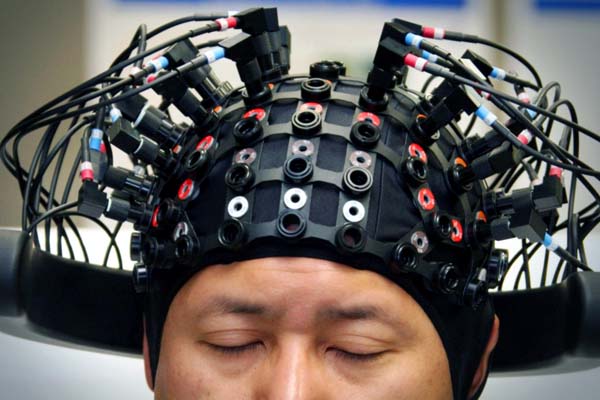
Focus, as it turns out, is not our minds' default mode -- it is a mental muscle you have to build and maintain. Sustained engagement on one point of focus is a distinct brain state, markedly different from a resting one. In meditation, for example, certain areas of the brain "light up" when engaged in deep focus, according to cognitive scientists.
Despite the physical appearance of sitting there with your eyes closed and doing nothing, meditation is a complex mental process. You have to direct your attention on the object of focus, notice distractions, corral your attention from what's distracting it, and then focus again. While doing so, you activate areas of the brain controlling those functions -- the prefrontal and visual cortex and areas of the sulcus. In fact, focus is a frenetic, mentally strenuous activity.
But as you practice concentration, focus gets easier. Over time, meditators were better able to control a specific type of brain waves, called "alpha rhythms," according to an MIT study, which flow through the brain's cortex, helping it to filter out distracting sensory information.
And most intriguingly, scientists discovered that long-term meditators are able to effectively "rewire" their brains, changing them physically over time. According to a UCLA study, long-term meditators have more folds in their cortex than non-meditators, allowing the brain to process information faster.
"Meditators are known to be masters in introspection and awareness as well as emotional control and self-regulation, so the findings make sense that the longer someone has meditated, the higher the degree of folding in the insula," said Eileen Luders, an assistant professor at UCLA's Laboratory of Neuroimaging. In an era that correlates multitasking with more information and intelligence, it's ironic that the best way to boost your brain's processing power is to think deeply on one thing and filter out the rest.
Workouts for the Mind
Meditation is a highly-effective method to train your mental powers, but you don't have to sit on a cushion and chant to develop your ability to focus. Just directing your attention with a bit more concentration on the task at hand can change your brain. Scientists studied the neurological differences between light pleasure and focused reading, and found that the brain reacted differently to even just a slight shift in attention. Closer, more concentrated reading activated parts of the brain involved in movement and touch, for example -- as if readers were living the story instead of just taking in information.
While it's easy to demonize technology in its role at chipping away at our ability to concentrate, several apps and software solutions are stepping up to the plate to help us regain focus. You can "train" your focus, sharpen your memory and otherwise boost your mental skills with exercises, puzzles and other mind teasers.
Brain Exercise, for iOS by Gamco, offers a mental regiment to improve your memory, logic and focus, while Brain Blast uses numbers-based puzzles to build your acumen. If you're interested in beefing up memory, Eidetic tests you on memorizing information. If you're on Android, you can download apps like Memory Trainer to challenge your powers of memory and concentration.
But if you need help focusing right away, Kelly McGonigal, author of "The Willpower Instinct," says a simple technique can get your prefrontal cortex pumping:
1. Sit still, either on a chair with your feet flat on the floor or on the ground with your legs crossed. Try not to move or fidget around, especially when that itch starts to creep up or you feel the urge to change positions. Stay still. It's important to train you not to follow your impulses.
2. To help you concentrate, close your eyes and focus on your breathing. When you breath in, in your mind, say "inhale." And think "exhale" when you breathe out. It activates the prefrontal cortex and quells the stress and craving parts of the brain.
3. Hone in on the way you breath and how wandering feels. After a few minutes of inhale and exhale, focus just on the sensation of breathing. If you notice your mind start to wander, focus back on breathing and say inhale and exhale a few times. That helps to train both self-awareness and self-control.
You can also take an outside-in approach and work on changing your environment. Some apps strip away distractions on the Internet, keeping you from checking e-mail, catching up on Facebook or otherwise browsing the Web when you should be working. Popular Mac programs like Freedom or SelfControl, for example, lock the Internet for up to eight hours, while StayFocusd does the same for Chrome.
If you're looking for total isolation, some programs completely, yet temporarily, strip your computer of any and all distractions, creating an ideal work environment. FocusWriter gives you a simple, distraction-free environment to write, while Mac programs like Isolator and Concentrate, let you work in only one program at a time, preventing you from toggling back and forth.
As distractions pile up, you'll need to stay vigilant and cultivate focus and concentration. These tasks, which work out our brains as much as our bodies, will become even more paramount as younger generations, immersed in social and mobile from an early age, enters schools and workplaces.
"Teens find distraction while working, distraction while driving, distraction while talking to the neighbors," Marcel Bullinga, futurist and author of "Welcome to the Future Cloud," told the Pew Internet Project. "Parents and teachers will have to invest major time and efforts into solving this issue -- silence zones, time-out zones, meditation classes without mobile, lessons in ignoring people on phones, texts and social networking."
The brain is a muscle that needs exercise to stay pliant, vital and alert. The mind's proven plasticity shows you can extend your mental powers well into your lifespan, but you have to carve out islands of quiet and calm to concentrate on important issues. After all, letting those mental powers atrophy because you can't ignore the constant pings and notifications seems too high a price to pay for convenience and connectivity -- a mind is a terrible thing to waste.
This post is sponsored by the Enterprise Mobile Hub and BlackBerry. ♦
Source: www.mobiledia.com
Bodybuilding for Your Brain
In the age of distraction, focus is an endangered mental ability. Here's how you can boost your powers of concentration.
By Kat Ascharya | June 07, 2013
You've heard it before: we're too distracted by gadgets. We're glued to our phones. We constantly text, ping and chat, instead of paying attention to the road, each other or the "analog world." Multitasking is a myth. Our brains are being rewired. Our kids are growing up permanently attached to iPads. Armageddon is coming in the shape of a smartphone. It's time to show our gadgets who's boss. Instead of letting technology drive us to distraction, we can use it to cultivate focus.
Plenty of stories highlight the dangers of distraction, whether it's in driving, parenting or just a lingering sense that our relationships to gadgets have become dysfunctional. Beyond the much-researched and obvious, arguments also shed light on the importance of the quality of focus.
Focus, defined as "directed attention" -- the ability to concentrate on one point steadily -- sounds simple. But as anyone who's tried to meditate for more than 15 minutes can tell you that maintaining a state of sustained concentration is harder than you think. Try it now: sit down, close your eyes and think of one thing -- a word, an image -- for just 10 minutes. Now, try to focus while your computer and various devices ping, text and otherwise clamor for your attention.
It's no wonder we can't focus. And with our close reliance on gadgets, and more workers employed in a mobile environment -- either BYOD or working at home -- we have an even greater tendency towards distraction. No co-workers, no boss looking over your shoulder. It's up to you to concentrate, and often when left to our own devices, we lose it.
Focus is distraction's flip side, and it's in short order these days. As a type of intellectual resilience, the ability to concentrate on just one thing and contemplate deeply is as rare as a diamond -- and just as prized by some employers.
"Short attention spans resulting from quick interactions will be detrimental to focusing on the harder problems and we will probably see stagnation in many areas: technology, even social venues such as literature," Alvaro Retana, an HP technologist told the Pew Internet Project. "The people who will strive and lead the charge will be the ones able to disconnect themselves to focus."
In other words, if you want to stand out in a crowd of job applicants, the ability to practice unwavering concentration will give you a competitive edge, especially at a time when people are more likely to check Facebook and Google and delve into the rabbit hole of distraction.
Mental Muscle
Focus, as it turns out, is not our minds' default mode -- it is a mental muscle you have to build and maintain. Sustained engagement on one point of focus is a distinct brain state, markedly different from a resting one. In meditation, for example, certain areas of the brain "light up" when engaged in deep focus, according to cognitive scientists.
Despite the physical appearance of sitting there with your eyes closed and doing nothing, meditation is a complex mental process. You have to direct your attention on the object of focus, notice distractions, corral your attention from what's distracting it, and then focus again. While doing so, you activate areas of the brain controlling those functions -- the prefrontal and visual cortex and areas of the sulcus. In fact, focus is a frenetic, mentally strenuous activity.
But as you practice concentration, focus gets easier. Over time, meditators were better able to control a specific type of brain waves, called "alpha rhythms," according to an MIT study, which flow through the brain's cortex, helping it to filter out distracting sensory information.
And most intriguingly, scientists discovered that long-term meditators are able to effectively "rewire" their brains, changing them physically over time. According to a UCLA study, long-term meditators have more folds in their cortex than non-meditators, allowing the brain to process information faster.
"Meditators are known to be masters in introspection and awareness as well as emotional control and self-regulation, so the findings make sense that the longer someone has meditated, the higher the degree of folding in the insula," said Eileen Luders, an assistant professor at UCLA's Laboratory of Neuroimaging. In an era that correlates multitasking with more information and intelligence, it's ironic that the best way to boost your brain's processing power is to think deeply on one thing and filter out the rest.
Workouts for the Mind
Meditation is a highly-effective method to train your mental powers, but you don't have to sit on a cushion and chant to develop your ability to focus. Just directing your attention with a bit more concentration on the task at hand can change your brain. Scientists studied the neurological differences between light pleasure and focused reading, and found that the brain reacted differently to even just a slight shift in attention. Closer, more concentrated reading activated parts of the brain involved in movement and touch, for example -- as if readers were living the story instead of just taking in information.
While it's easy to demonize technology in its role at chipping away at our ability to concentrate, several apps and software solutions are stepping up to the plate to help us regain focus. You can "train" your focus, sharpen your memory and otherwise boost your mental skills with exercises, puzzles and other mind teasers.
Brain Exercise, for iOS by Gamco, offers a mental regiment to improve your memory, logic and focus, while Brain Blast uses numbers-based puzzles to build your acumen. If you're interested in beefing up memory, Eidetic tests you on memorizing information. If you're on Android, you can download apps like Memory Trainer to challenge your powers of memory and concentration.
But if you need help focusing right away, Kelly McGonigal, author of "The Willpower Instinct," says a simple technique can get your prefrontal cortex pumping:
1. Sit still, either on a chair with your feet flat on the floor or on the ground with your legs crossed. Try not to move or fidget around, especially when that itch starts to creep up or you feel the urge to change positions. Stay still. It's important to train you not to follow your impulses.
2. To help you concentrate, close your eyes and focus on your breathing. When you breath in, in your mind, say "inhale." And think "exhale" when you breathe out. It activates the prefrontal cortex and quells the stress and craving parts of the brain.
3. Hone in on the way you breath and how wandering feels. After a few minutes of inhale and exhale, focus just on the sensation of breathing. If you notice your mind start to wander, focus back on breathing and say inhale and exhale a few times. That helps to train both self-awareness and self-control.
You can also take an outside-in approach and work on changing your environment. Some apps strip away distractions on the Internet, keeping you from checking e-mail, catching up on Facebook or otherwise browsing the Web when you should be working. Popular Mac programs like Freedom or SelfControl, for example, lock the Internet for up to eight hours, while StayFocusd does the same for Chrome.
If you're looking for total isolation, some programs completely, yet temporarily, strip your computer of any and all distractions, creating an ideal work environment. FocusWriter gives you a simple, distraction-free environment to write, while Mac programs like Isolator and Concentrate, let you work in only one program at a time, preventing you from toggling back and forth.
As distractions pile up, you'll need to stay vigilant and cultivate focus and concentration. These tasks, which work out our brains as much as our bodies, will become even more paramount as younger generations, immersed in social and mobile from an early age, enters schools and workplaces.
"Teens find distraction while working, distraction while driving, distraction while talking to the neighbors," Marcel Bullinga, futurist and author of "Welcome to the Future Cloud," told the Pew Internet Project. "Parents and teachers will have to invest major time and efforts into solving this issue -- silence zones, time-out zones, meditation classes without mobile, lessons in ignoring people on phones, texts and social networking."
The brain is a muscle that needs exercise to stay pliant, vital and alert. The mind's proven plasticity shows you can extend your mental powers well into your lifespan, but you have to carve out islands of quiet and calm to concentrate on important issues. After all, letting those mental powers atrophy because you can't ignore the constant pings and notifications seems too high a price to pay for convenience and connectivity -- a mind is a terrible thing to waste.
This post is sponsored by the Enterprise Mobile Hub and BlackBerry. ♦
Source: www.mobiledia.com
Subscribe to:
Posts (Atom)
Lo que la escuela dejó de prometer: la movilidad social, por Gala Díaz Langou
The following information is used for educational purposes only. Lo que la escuela dejó de prometer: la movilidad social Las pruebas PISA ...
-
The following information is used for educational purposes only. Massive Open Online Courses (MOOCs) and the next generation Alex Cu...
-
The following information is used for educational purposes only. Mentiras, paranoia y mala fama 26 de julio de 2026 Por Jo...
-
The following information is used for educational purposes only. Filmed February 2017 at TEDLagos Ideas Search Stephanie Busari: How f...