The following information is used for educational purposes only.

In this blog, teachers, students and all those who have some kind of interest in the English language will find useful, interesting, curious and funny things to be used in their classes or for their personal enjoyment.
Thursday, July 26, 2012
Nunca es tarde para aprender y ayudar
The following information is used for educational purposes only.
Vejez plena
Nunca es tarde para aprender y ayudar
ONG y universidades brindan espacios para que adultos mayores puedan estudiar, seguir activos, desplegar sus potencialidades y hasta ayudar a otros
Por Carla Melicci | Para LA NACION

Adultos mayores crean artículos para ganar mayor autonomía. Foto: DIEGO SPIVACOW/AFV
El clima invitaba a quedarse en casa: cielo nublado, tormentas aisladas y frío, mucho frío. Sin embargo, ellos se reunieron como siempre, como todos los viernes, con té y galletitas caseras de por medio, en el aula de la Universidad Nacional de Lanús (UNLa).
Ellos no son estudiantes universitarios, pero sí mayores -de 60, de 70, algunos jubilados, otros abuelos- que aprenden, enseñan. Son representantes de la llamada tercera edad activa, que deciden levantarse todos los días para ayudar al otro.
"Formamos una gran familia que nunca pierde el bueno humor", definen entre risas Maruja y Natividad que, a sus 84 y 71 años, respectivamente, participan en forma activa en el Centro de Voluntariado Social perteneciente al Centro del Adulto Mayor de UNLa.
Esa gran familia hoy está conformada por 30 personas, donde cada uno hace lo que realmente sabe. Como voluntaria del centro, además de contadora y psicóloga social, María Ester a los 60 años cuenta que, junto con los estudiantes de la carrera de Diseño Industrial de la Facultad, el grupo encaró un nuevo desafío: crear objetos amigables que faciliten la autonomía, tanto para mayores o personas que posean algún tipo de discapacidad.
"Nos dividimos en equipos, relevamos escuelas zonales y hogares de ancianos, y pensamos, sobre la base de sus necesidades, qué podíamos aportar nosotros para mejorar su calidad de vida. Y creamos más de 30 dispositivos y adaptaciones artesanales, caseros, con materiales traídos desde nuestras casas -comenta María Ester-. Este año recibimos con alegría la noticia que nos otorgaron el Premio Bienal de Ancianidad 2011-12 Proyectos Educativos y Personas Mayores que Enseñan y Aprenden, de la Fundación Navarro Viola."
Por su parte, Carlos, a sus juveniles 81 años, hace seis que es voluntario en el Centro del Adulto Mayor de UNLa. Con una larga carrera como profesor, hoy reparte su tiempo dando clases de arte cerámico en centros de jubilados y en la Facultad.
Se nota que no es una persona de quedarse con los brazos cruzados y admite que no le alcanzan las horas del día para hacer todas sus tareas. "Siempre quise transmitir mis conocimientos a otros, por eso decidí salir a capacitar gente en los centros de jubilados, pero les enseño desde el ejemplo", explica Carlos casi sin vacilar, mientras cuenta que en los 50 pintaba propagandas -"hoy grafitis", corrige- en la calle.
Enseñar desde otro lado
Salomón aprendió bien a los 75 años cómo manejar una computadora. Tras la inquietud e interés por transmitir sus conocimientos a sus pares, preguntó si podía dar clases de computación en la Universidad Maimónides. Y esa pregunta tuvo una respuesta positiva: hoy Salomón, a sus 92 años -aunque su voz no los aparente- coordina los cursos para adultos mayores que se dictan en la Facultad.
"Hace cuatro años ya que no doy clases, siento que no corresponde. Prefiero acompañar a la profesora que dicta el curso porque así puedo dedicarme más a cada uno de los adultos, a repetirles las cosas mil veces si es necesario, a enseñarles que no hay que tener miedo a equivocarse", dice el coordinador.
Salomón manda mensajes de texto, responde e-mails con el celular y hasta chatea con sus seis bisnietos. "La computadora es un medio de comunicación, te abre al mundo y si a cada alumno se le da lo que realmente necesita, sale adelante. No es fácil -apunta el coordinador-, es cuestión de tener paciencia."
"Nada se construye en soledad", afirma rotundamente desde la provincia de Córdoba Mirella Canú coordinadora del Centro de Promoción al Adulto Mayor (Cepram). "Nosotros como adultos -con mis 62 años- tenemos que empoderar nuestros derechos, hacernos cargo, salir, dar el tiempo que uno dispone al dejar de trabajar, porque todo lo produce ese encuentro, del voluntariado, permite conocer al otro e ir en contra de nuestros propios prejuicios."
Por eso emprendieron este año un nuevo proyecto dentro de Cepram: Derechos Andantes, propuesta también por la Fundación Navarro Viola. Así, los adultos mayores, junto a profesionales y estudiantes trabajan a través de un programa de educación comunitaria, para que quienes cumplieron 60 o más conozcan sus derechos, se apropien de ellos y los inculquen en su entorno.
Como parte del proyecto, Diana relata que tras jubilarse dejó de ejercer su profesión de abogada, para dedicarse a la narración oral y al voluntariado dentro del centro. "Somos formadores de ciudadanía. La verdad que creamos un lindo grupo, de todas las edades, de distintas clases sociales, heterogéneo. Digamos que se compromete con el trabajo social", dice con acento cordobés a sus 61 años Diana.
Y afirma sin titubear: "La vejez es un buen momento para ejercer el voluntariado, porque podemos entregar y compartir ese tiempo libre que tenemos. Hay que asumirla. A mí me encanta decir soy vieja, lo disfruto y estoy muy feliz de serlo".
30
Son las personas que participan del Centro de Voluntariado Social de la UNLa
250 mil
Pesos son los que destinará la Fundación Navarro Viola a los 7 proyectos ganadores de su concurso 2011-2012
COMO COLABORAR
Cepram
http://cepram.org.ar
Universidad Nacional de Lanús
www.unla.edu.ar
Fundación Navarro Viola
www.fnv.org.ar
Gerontología-Universidad Maimónides
http://gerontologia.maimonides.edu/.
Fuente: www.lanacion.com.ar
Exonario, el libro de las palabras que no existen
The following information is used for educational purposes only.
Exonario, el libro de las palabras que no existen
El filósofo y escritor Jorge Mux inventó miles de expresiones para nombrar sensaciones o cosas que no tienen nombre; descubrí qué significa aguinaldear, bisoliña, metafiaca, entre otras
Por Verónica Dema | LA NACION

Nubídea: nube que adquiere momentáneamente una forma reconocible. Foto: flickr.com/thrillseekr
"Muchos años después, frente al pelotón de fusilamiento, el coronel Aureliano Buendía había de recordar aquella tarde remota en que su padre lo llevó a conocer el hielo. Macondo era entonces una aldea de veinte casas de barro y cañabrava construidas a la orilla de un río de aguas diáfanas que se precipitaban por un lecho de piedras pulidas, blancas, enormes como huevos prehistóricos. El mundo era tan reciente que muchas cosas carecían de nombre y para mencionarlas había que señalarlas con el dedo". (Gabriel García Márquez, Cien años de Soledad)
Como en la invención de García Márquez y pese al paso del tiempo, cuando hace unos años el profesor de Filosofía del Lenguaje Jorge Mux empezó a escribir ficción sintió que le faltaban palabras para expresarse. Había, para él, sentimientos, acciones de la vida cotidiana, estados que no tenían su lugar en el diccionario, no podían ser nombrados. Entonces, se dispuso a la tarea de crear palabras nuevas.
Así nació Exonario, primero como un blog y, desde hace pocos días, se convirtió en libro. Se trata de expresiones que no existían y que, en palabras del autor, son "definiciones insólitas, de dudosa justificación, de nombres hilarantes y muchas veces de imposible referencia". La publicación impresa es una selección de 270 palabras, apenas el 10 por ciento de las que ya se pueden encontrar en la versión digital.

Jorge Mux, autor de Exonario. Foto: Gentileza Jorge Mux
La cuestión es seria: Mux es un estudioso del lenguaje y recurre a sus conocimientos de etimología del griego y el latín para conformar las palabras; luego da una definición, ejemplifica con alguna situación de uso cotidiano y lo ilustra con una foto o dibujo. "La idea merecía llevar un nombre que no estuviera en el diccionario; así nació Exonario, un "catálogo de voces y acepciones nuevas que no pueden encontrarse en un diccionario", dice Mux a LA NACION. La obra está dedicada a sus "nosumos", las identidades que hubiéramos tenido si nuestras madres nos hubieran concebido con otra persona. "La condición para que estas palabras estén acá es que no existan en otro lado", afirma. En el blog, una leyenda pide: "Si alguna de las palabras que aparecen aquí se encuentra también en algún otro diccionario, por favor avísenos".
Hace algo más de cinco años que este licenciado en Filosofía, escritor y profesor en la Universidad Nacional del Sur, en Bahía Blanca, inició esta cruzada creativa en su blog. Con rigurosidad, durante tres años, cada día fue sumando al menos una nueva palabra; a veces, dos, tres, hasta cuatro. Luego, su entusiasmo se contagió entre los seguidores de su blog, que empezaron a colaborar con palabras y así sumaron miles de nuevas expresiones.
El drama de "enchulenguizarse"
Por más que la propuesta sea seria desde el punto de vista académico, algunos de los términos encierran definiciones insólitas y en otros, la sonoridad ya provoca una sonrisa. En "Actitudes humanas cotidianas" se lee, por ejemplo, "Aguinaldear" (verbo intransitivo; de aguinaldo): "Malgastar de manera compulsiva una cantidad de dinero que sólo se recibe una única vez".
En el mismo apartado, Mux lista "Enchulenguizar", (un verbo intransitivo que proviene de chulengo: parrilla tambor para hacer asados): "Tener el trasero cada vez más grande". Se explaya para explicar, entre otras cosas, que la "enchulenguización" es diferente según se trate de hombres y mujeres; en el caso de estas últimas se refiere a la que se produce naturalmente después del primer parto, para los hombres habla de una fuerte tendencia entre quienes tienen más de 30, realizan trabajos sedentarios y son afectos a las bebidas alcohólicas y a los asados.
¡Sos un aguglónimo!
"No existís! ¿Sabés qué? Sos un aguglónimo, nadie te registra", es una frase irónica perfectamente posible para quien maneja el Exonario. Aguglónimo (conformado por la negación a, más google y nombre, en griego) es una "palabra que no arroja resultados en los motores de búsqueda de Internet".
En la misma sección -se refiere a "Lenguaje y artes discursivas"- se define un "Ensarmentado": (adjetivo; de en- y Sarmiento, prócer argentino): "Dícese de quien habla como si estuviese leyendo palabras para un acto escolar. La creatividad también llegó a los insultos. "Trasputo" (sustantivo y adjetivo; del latín trans = más allá y putare = juzgar, de donde se deriva "apodo"): "Insulto que consiste en invertir el género del insultado". Y explica: "Un apodo insultante se vuelve doblemente ofensivo si se le cambia el género. Llamarle 'gordo cagador' a una muchacha, o 'conchita' a un varón agrega un plus que no está presente en el agravio genéricamente correcto porque el cambio de género es una humillación gratuita y fuertemente discriminatoria".
Fiaca de sólo pensarlo
Mux, en su libro, también lista una selección de términos que refieren a "Procesos mentales, sensaciones, emociones". Hay casi cincuenta, entre los que se encuentra la "Metafiaca" (sustantivo; de meta = más allá y fiaca = argentinismo por pereza; adjetivo: metafiacoso): "Sensación de cansancio generada por la posibilidad de la realización de futuras actividades que provocan cansancio".
También figura una palabra de gran sonoridad: "Bisoliña" (sustantivo; del latín bi = dos y solis = sol), que es la "semejanza que poseen los días feriados con un domingo" y, en su segunda acepción, el "sentimiento de confusión derivado de creer que un determinado día feriado es domingo".

Vestiplecio: abrazo que se dan las prendas de vestir cuando están en el lavarropas o colgadas en la soga. Foto: netlog.com/ababoll
Este creador de palabras señala que no es su intención que los términos nacidos de su inspiración y la de sus seguidores virtuales circulen socialmente. Como estudioso del lenguaje sabe que las nuevas palabras que se imponen son las que surgen de la propia comunidad de hablantes. "Nadie puede arrogarse ser el dueño del lenguaje", dice. "Los términos surgen de una manera incontrolada en el uso social, no se pueden imponer desde un blog o un libro". Su pretensión, resume, es más bien estética y lúdica.
La palabra inaugural blog fue "Nosófobo": del griego gnosis, sabiduría, y fobos, miedo, que alude a aquella persona que tiene "horror al conocimiento y a cualquier actividad relacionada con él". El carece de ese miedo. Más bien, la búsqueda de lo desconocido parece ser uno de sus mayores incentivos.
Otras diez palabras inventadas
Religofrénico (adjetivo formado por la contracción entre 'religioso' y 'oligofrénico'): Persona que deambula de religión en religión hasta que adopta una postura ecléctica y mística, a partir de elementos heterogéneos e incluso contradictorios
.Toletolerancia (conjunción de los términos "tole tole": bulla, alboroto, desorden y "tolerancia"): Tolerancia para con las situaciones caóticas
.Pluncio (adjetivo; del latín plumbeus = de plomo y nuntiator = anunciador): Persona que anuncia muchas veces una cosa antes de hacerla
.Leticismo (sustantivo; del latín laetitia = alegría, felicidad): Sensación de que la idea olvidada era muy buena
.Nomaspito (adjetivo femenino; de no, más y pito): Mujer madura que en su juventud fue conocida por su escandalosa vida sexual y que, con el paso del tiempo y los desengaños ha optado por vivir en castidad y sin pareja, y se dedica a actividades ecológicas, asistenciales o religiosas
.Dolicatroli (adjetivo; idiotismo): Hombre joven, torpe en sus movimientos y en sus relaciones sociales
.Regibonecer (verbo intransitivo; de gibón y rejuvenecer): Adquirir apariencia simiesca por aplicarse tratamientos para rejuvenecer
.Engripeta (adjetivo; no cambia de desinencia en el masculino; de gripe): Dícese de la persona que continuamente tiene algún malestar
.Imbestiagar (verbo intransitivo; de investigar y bestia): Considerar como suficiente el saber obtenido en los dos primeros párrafos o la contratapa de un libro
.Asintomiatra (sustantivo y adjetivo; del griego a = negación, sýmptoma = fenómeno que acontece en simultáneo e iatros = médico): Enfermedad cuyos síntomas desaparecen cuando está presente el médico
Fuente: www.lanacion.com.ar
Exonario, el libro de las palabras que no existen
El filósofo y escritor Jorge Mux inventó miles de expresiones para nombrar sensaciones o cosas que no tienen nombre; descubrí qué significa aguinaldear, bisoliña, metafiaca, entre otras
Por Verónica Dema | LA NACION

Nubídea: nube que adquiere momentáneamente una forma reconocible. Foto: flickr.com/thrillseekr
"Muchos años después, frente al pelotón de fusilamiento, el coronel Aureliano Buendía había de recordar aquella tarde remota en que su padre lo llevó a conocer el hielo. Macondo era entonces una aldea de veinte casas de barro y cañabrava construidas a la orilla de un río de aguas diáfanas que se precipitaban por un lecho de piedras pulidas, blancas, enormes como huevos prehistóricos. El mundo era tan reciente que muchas cosas carecían de nombre y para mencionarlas había que señalarlas con el dedo". (Gabriel García Márquez, Cien años de Soledad)
Como en la invención de García Márquez y pese al paso del tiempo, cuando hace unos años el profesor de Filosofía del Lenguaje Jorge Mux empezó a escribir ficción sintió que le faltaban palabras para expresarse. Había, para él, sentimientos, acciones de la vida cotidiana, estados que no tenían su lugar en el diccionario, no podían ser nombrados. Entonces, se dispuso a la tarea de crear palabras nuevas.
Así nació Exonario, primero como un blog y, desde hace pocos días, se convirtió en libro. Se trata de expresiones que no existían y que, en palabras del autor, son "definiciones insólitas, de dudosa justificación, de nombres hilarantes y muchas veces de imposible referencia". La publicación impresa es una selección de 270 palabras, apenas el 10 por ciento de las que ya se pueden encontrar en la versión digital.
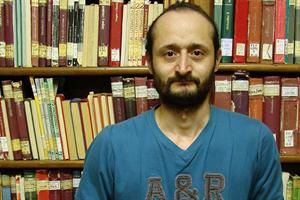
Jorge Mux, autor de Exonario. Foto: Gentileza Jorge Mux
La cuestión es seria: Mux es un estudioso del lenguaje y recurre a sus conocimientos de etimología del griego y el latín para conformar las palabras; luego da una definición, ejemplifica con alguna situación de uso cotidiano y lo ilustra con una foto o dibujo. "La idea merecía llevar un nombre que no estuviera en el diccionario; así nació Exonario, un "catálogo de voces y acepciones nuevas que no pueden encontrarse en un diccionario", dice Mux a LA NACION. La obra está dedicada a sus "nosumos", las identidades que hubiéramos tenido si nuestras madres nos hubieran concebido con otra persona. "La condición para que estas palabras estén acá es que no existan en otro lado", afirma. En el blog, una leyenda pide: "Si alguna de las palabras que aparecen aquí se encuentra también en algún otro diccionario, por favor avísenos".
Hace algo más de cinco años que este licenciado en Filosofía, escritor y profesor en la Universidad Nacional del Sur, en Bahía Blanca, inició esta cruzada creativa en su blog. Con rigurosidad, durante tres años, cada día fue sumando al menos una nueva palabra; a veces, dos, tres, hasta cuatro. Luego, su entusiasmo se contagió entre los seguidores de su blog, que empezaron a colaborar con palabras y así sumaron miles de nuevas expresiones.
El drama de "enchulenguizarse"
Por más que la propuesta sea seria desde el punto de vista académico, algunos de los términos encierran definiciones insólitas y en otros, la sonoridad ya provoca una sonrisa. En "Actitudes humanas cotidianas" se lee, por ejemplo, "Aguinaldear" (verbo intransitivo; de aguinaldo): "Malgastar de manera compulsiva una cantidad de dinero que sólo se recibe una única vez".
En el mismo apartado, Mux lista "Enchulenguizar", (un verbo intransitivo que proviene de chulengo: parrilla tambor para hacer asados): "Tener el trasero cada vez más grande". Se explaya para explicar, entre otras cosas, que la "enchulenguización" es diferente según se trate de hombres y mujeres; en el caso de estas últimas se refiere a la que se produce naturalmente después del primer parto, para los hombres habla de una fuerte tendencia entre quienes tienen más de 30, realizan trabajos sedentarios y son afectos a las bebidas alcohólicas y a los asados.
¡Sos un aguglónimo!
"No existís! ¿Sabés qué? Sos un aguglónimo, nadie te registra", es una frase irónica perfectamente posible para quien maneja el Exonario. Aguglónimo (conformado por la negación a, más google y nombre, en griego) es una "palabra que no arroja resultados en los motores de búsqueda de Internet".
En la misma sección -se refiere a "Lenguaje y artes discursivas"- se define un "Ensarmentado": (adjetivo; de en- y Sarmiento, prócer argentino): "Dícese de quien habla como si estuviese leyendo palabras para un acto escolar. La creatividad también llegó a los insultos. "Trasputo" (sustantivo y adjetivo; del latín trans = más allá y putare = juzgar, de donde se deriva "apodo"): "Insulto que consiste en invertir el género del insultado". Y explica: "Un apodo insultante se vuelve doblemente ofensivo si se le cambia el género. Llamarle 'gordo cagador' a una muchacha, o 'conchita' a un varón agrega un plus que no está presente en el agravio genéricamente correcto porque el cambio de género es una humillación gratuita y fuertemente discriminatoria".
Fiaca de sólo pensarlo
Mux, en su libro, también lista una selección de términos que refieren a "Procesos mentales, sensaciones, emociones". Hay casi cincuenta, entre los que se encuentra la "Metafiaca" (sustantivo; de meta = más allá y fiaca = argentinismo por pereza; adjetivo: metafiacoso): "Sensación de cansancio generada por la posibilidad de la realización de futuras actividades que provocan cansancio".
También figura una palabra de gran sonoridad: "Bisoliña" (sustantivo; del latín bi = dos y solis = sol), que es la "semejanza que poseen los días feriados con un domingo" y, en su segunda acepción, el "sentimiento de confusión derivado de creer que un determinado día feriado es domingo".

Vestiplecio: abrazo que se dan las prendas de vestir cuando están en el lavarropas o colgadas en la soga. Foto: netlog.com/ababoll
Este creador de palabras señala que no es su intención que los términos nacidos de su inspiración y la de sus seguidores virtuales circulen socialmente. Como estudioso del lenguaje sabe que las nuevas palabras que se imponen son las que surgen de la propia comunidad de hablantes. "Nadie puede arrogarse ser el dueño del lenguaje", dice. "Los términos surgen de una manera incontrolada en el uso social, no se pueden imponer desde un blog o un libro". Su pretensión, resume, es más bien estética y lúdica.
La palabra inaugural blog fue "Nosófobo": del griego gnosis, sabiduría, y fobos, miedo, que alude a aquella persona que tiene "horror al conocimiento y a cualquier actividad relacionada con él". El carece de ese miedo. Más bien, la búsqueda de lo desconocido parece ser uno de sus mayores incentivos.
Otras diez palabras inventadas
Religofrénico (adjetivo formado por la contracción entre 'religioso' y 'oligofrénico'): Persona que deambula de religión en religión hasta que adopta una postura ecléctica y mística, a partir de elementos heterogéneos e incluso contradictorios
.Toletolerancia (conjunción de los términos "tole tole": bulla, alboroto, desorden y "tolerancia"): Tolerancia para con las situaciones caóticas
.Pluncio (adjetivo; del latín plumbeus = de plomo y nuntiator = anunciador): Persona que anuncia muchas veces una cosa antes de hacerla
.Leticismo (sustantivo; del latín laetitia = alegría, felicidad): Sensación de que la idea olvidada era muy buena
.Nomaspito (adjetivo femenino; de no, más y pito): Mujer madura que en su juventud fue conocida por su escandalosa vida sexual y que, con el paso del tiempo y los desengaños ha optado por vivir en castidad y sin pareja, y se dedica a actividades ecológicas, asistenciales o religiosas
.Dolicatroli (adjetivo; idiotismo): Hombre joven, torpe en sus movimientos y en sus relaciones sociales
.Regibonecer (verbo intransitivo; de gibón y rejuvenecer): Adquirir apariencia simiesca por aplicarse tratamientos para rejuvenecer
.Engripeta (adjetivo; no cambia de desinencia en el masculino; de gripe): Dícese de la persona que continuamente tiene algún malestar
.Imbestiagar (verbo intransitivo; de investigar y bestia): Considerar como suficiente el saber obtenido en los dos primeros párrafos o la contratapa de un libro
.Asintomiatra (sustantivo y adjetivo; del griego a = negación, sýmptoma = fenómeno que acontece en simultáneo e iatros = médico): Enfermedad cuyos síntomas desaparecen cuando está presente el médico
Fuente: www.lanacion.com.ar
Wednesday, July 25, 2012
MKTG-Managing Supply Chain Relationships
The following information is used for educational purposes only.
Managing Supply Chain Relationships
Jun 06, 2011
A supply chain’s performance weighs heavily on the relationships between buyers and suppliers. Accounting for external, internal and individual relationships makes managing rather difficult. Alok Kumar and coauthors suggest that firms consider the supply chain as a whole and start with a relationship blueprint that comprises all parties involved in servicing the customer.
Lately, industry majors such as Nissan and IBM have embarked on ambitious efforts to craft high-performance supply chain relationships. However, as noted by Nissan’s CEO, Carlos Ghosn, such attempts often fall short of expectations because of incompatibilities between the ways in which different supply chain constituents are managed.
Today’s “extended” supply chains are complex. Typically, they comprise both relationships with external suppliers and individual departments (e.g. marketing and production) within a firm itself. The performance of a supply chain depends on how individual relationships are managed and the overall pattern of relationships management.
Alok Kumar, assistant professor of marketing at the Smeal College of Business, and coauthors Jan Heide of the University of Wisconsin-Madison and Kenneth Wathne of the Norwegian School of Management, study two broad ways to manage internal and external relationships—hard incentives and soft relational norms.
Hard incentives, like price premiums, are one means to motivate performance. Using incentives requires that each party’s role be distinctly and explicitly specified.
A second way to motivate performance involves fostering a sense of unity and team spirit through ongoing socialization. Where such efforts succeed in cultivating norms, a supplier is likely to view the focal firm’s goals as its own and is motivated to deliver superior performance. Similarly, norms can exist in an interdepartmental setting. Norms-based relationships differ fundamentally from incentive-based ones because in the former, individual roles and tasks often remain overlapping (i.e., parties share joint roles, as one ’team’) and tacit (i.e., not documented explicitly or contractually).
“It is precisely in their ill-defined form that norms become valuable to firms,” says Kumar. “They create a zone of indifference—a craft to forego personal gains, within limits, for the well-being of the relationship—which helps firms adapt quickly to marketplace changes.”
Existing research demonstrates how both incentives and norms can motivate performance when deployed individually within a relationship. However, what happens when different mechanisms are deployed across related supply chain relationships—toward an external supplier and between a firm’s internal departments—is less well understood.
The authors argue that coordination problems can emerge when different mechanisms—incentives and norms—are deployed in the same supply chain. For instance, when Nissan deployed high-powered incentives with suppliers, they were motivated to cooperate. However, these efforts ran into a roadblock—the internal culture of norms. The lack of role specification and documentation internally creates problems for suppliers, who demand an explicit specification of tasks that impact their incentives.
Companies need to be cognizant of potential incompatibilities across relationships, which can create problems if not managed properly. “The two types of relationship management strategies have to work together holistically across external and internal relationships in order to deliver performance to the downstream customer,” says Kumar. “Misalignment of individual components can precipitate system-level performance losses.”
Such was the case with Nissan. By themselves, hard supplier incentives have a beneficial effect on performance, as do the system of soft relational norms internally within the firm. However, the combined effect of these mechanisms results in coordination slippages for the system as a whole.
The researchers suggest that firms start with a relationship blueprint that comprises all of the different parties or units that are involved in servicing the customer. This may reveal potentially problematic mismatches across units due to differences in governance mechanisms. If the expected efficiency losses due to mismatches are substantial, firms should consider altering the magnitude of incentives or norms. While altering incentive systems might sacrifice certain gains within an individual relationship, doing so could limit overall performance losses for the supply chain as a whole.
However, caution is needed. Deep rooted norms and incentives may both be subject to considerable inertia and attempts to alter them can mobilize opposition from various stakeholders. Ample and transparent communication is a necessary requisite to manage such change processes.
Firms that have developed strong internal norms can limit the risk of mismatches and performance losses by diligently qualifying suppliers based on their willingness to subscribe to the norms. Toyota, for instance, practices such a philosophy.
Especially creative organizational solutions may be called for when a firm has multiple suppliers who are managed very differently. For instance, the organization may need to be decomposed into distinct internal teams which deal with particular suppliers, such that both external and internal systems are subject to compatible governance regimes.
Overall, the key insight is that firms need to consider the supply chain system as a whole. Various relationships may work well individually, but as a system, they may not. Specifically, mixing different relationship strategies can create coordination problems and performance losses.
Their paper, “Performance Implications of Mismatched Governance Regimes Across External and Internal Relationships,” has recently appeared in the Journal of Marketing.
Source: www.research.smeal.psu.edu
MKTG-The Consumer-Brand Relationship
The following information is used for educational purposes only.
The Consumer-Brand Relationship
Mar 20, 2012
It is widely assumed that all consumers react similarly to brand advertising. However, a research study from a professor at the Penn State Smeal College of Business finds that because consumers carry their own unique biases and traits, they are as much of a co-creator of the consumer–brand relationship as the marketer. The study shows that consumers differ inherently in the way they interact with and process information about brands.
Despite extensive research into the role of branding and its impact on the consumer-brand relationship, much of what is implied about this relationship is that all consumers react similarly to brand advertising. However, a recent study from a professor at the Penn State Smeal College of Business finds that consumers are as much the co-creator in the consumer-brand relationship as the marketers because of the way they organize and use brand information based on their own unique biases and traits.
Rajdeep Grewal, Irving & Irene Bard Professor of Marketing at Smeal, and coauthors Sanjay Puligadda and William T. Ross, Jr. examine brand schema, or the way in which individual consumers approach information surrounding brands. Schema is a term often used in psychology to describe the organizing mechanism for human thought. In this particular study, the researchers use the term to classify consumers as either brand schematic or brand aschematic.
“Brand schematicity isn’t an inclination toward any particular brand or brands,” write the researchers. “It is a representation of the consumer’s information processing approach. Just as some people can be race or gender schematic, consumers are predisposed to process information according to brand schema.”
While brand aschematic consumers see brands as merely labels on products, brand schematic consumers place high priority on brands, are more receptive to brand information, and recall this information more readily based on brand images etched in their memory. Furthermore, brand schematic consumers are more likely to align with certain brands based on what their friends use, or make judgments about brands based on the opinions of others.
“Peer influence on consumption-related beliefs begins early in life and continues through adolescence,” write the researchers, “such that it can determine a child’s materialistic orientation. A consumer who grew up with parents or peers who had favorite brands or emphasized the importance of the brand in consumption decisions is more likely to develop consumption schema based on brand information.”
In a series of studies dividing brand schematic and brand aschematic consumers, the researchers measure and predict how consumers interact with and process information about brands. In one study, the researchers validate brand schematicity by asking participants to identify logos of popular companies, such as Apple, Nike, Pepsi, and Target, while recording response times. Those consumers placed in the brand schematic group had quicker response times than those identified as brand aschematic.
A second study shows the difference in the way in which brand schematic consumers organize information about products compared to their brand aschematic counterparts. In deciding between different products made by Rolex, brand schematic consumers extend features like function and durability to all Rolex products based on the “luxury” connotation associated with the brand name. In contrast, brand aschematic consumers are more likely to prioritize product type or price over the association of luxury. Such consumers will extend a luxury association to different products from the Rolex family only if the products’ features also connote luxury.
The findings highlight how consumers who are brand schematic are more influenced by advertising that promotes brand rather than product attributes. This carries significant implications for marketers who spend a considerable amount of money and effort on promoting brands. Because consumers vary based on their predisposition to brands, the researchers suggest that marketers should customize their efforts to maximize the effectiveness of their advertising.
The study, “Individual Differences in Brand Schematicity,” was recently published in the Journal of Marketing Research.
Source: www.research.smeal.psu.edu
MKTG-Governing Electronic Business-to-Business Markets
The following information is used for educational purposes only.
Governing Electronic Business-to-Business Markets
May 12, 2010
Governance mechanisms for business-to-business (B2B) electronic markets work best if tailored to each market individually. Smeal’s Rajdeep Grewal highlights three governance mechanisms: monitoring, community building, and self-participation. Based on the level of behavioral and external uncertainties, market makers must decide which mechanisms to emphasize to generate growth and financial success within the market.
In response to the growing impact of business-to-business (B2B) electronic markets on the economy and business transactions, a marketing professor at the Penn State Smeal College of Business and his coauthors discuss ways for market makers to manage and govern electronic B2B markets.
“Since electronic markets lack the tangibility and visibility of a physical infrastructure, the market maker is challenged to emphasize the appropriate governance mechanisms to ensure growth and financial success of the electronic market,” say the researchers in their paper “Governance Mechanisms in Business-to-Business Electronic Markets” forthcoming in the Journal of Marketing.
Rajdeep Grewal and coauthors Anindita Chakravarty of the University of Georgia, also a Smeal Ph.D. student, and Amit Saini of the University of Nebraska-Lincoln highlight three governance mechanisms: monitoring, community building, and self-participation and help market makers determine which works best for their market.
Monitoring refers to the actions a market maker takes to maintain order and discipline within the market, while community building develops trust within the market and decreases the likelihood of opportunistic behaviors, like lying and cheating. Self-participation occurs when the market maker interacts directly in the market as a participant (i.e., buyer and/or seller) to gain knowledge on the functioning of the market.
In order to analyze the effectiveness of the governance mechanisms, the researchers address how three sources of behavioral and external uncertainty can influence the success of the mechanisms.
Behavioral uncertainties can be attributed to either the market maker’s reputation or the price making mechanism of the market. “These types of uncertainties are in control of the marketplace and arise from buyers and sellers getting together,” says Grewal.
External uncertainties are due to the volatile nature of the demand environment surrounding the market and its participants.
“Because the three governance mechanisms are differentially effective under different aspects of behavioral and external uncertainty,” the researchers explain, “market makers should recognize how each can be developed, implemented, and maintained in the context of electronic markets.”
What’s a Manager To Do?

After surveying B2B electronic markets, the authors find that based on which uncertainties surface, the market monitors can choose to emphasize or deemphasize any of the three governance mechanisms.
Highly reputed market makers should emphasize monitoring and self-participation “given that reputed market makers appear unobtrusive in their monitoring and reputed self-participating market-making firms do not provoke concerns about self-interest–seeking behaviors,” say the authors.
In a dynamic price setting, like auctions, market makers should emphasize self-participation, so they are able to experience uncertainty within the market first-hand and take action to decrease it if need be.
On the contrary, the transparency of a static pricing electronic market makes community building the most appropriate governance mechanism.
If there is high demand uncertainty within the market, market makers should emphasize monitoring and deemphasize self-participation. “Monitoring helps fill information gaps about participant composition, expectations, and behaviors,” add the researchers. “Self-participation harms the electronic market’s performance because of frequent changes in the participants and their opportunistic behavior in dynamic environments.”
The authors address the various governance challenges and opportunities that arise for market makers and provide further direction to help them navigate volatile environments.
“The key challenge is to govern under uncertainty in the virtual environment,” they add. “The opportunity lies in the freedom to create a market for any product or service, global or local, as long as market makers make the right decisions about when to monitor, when to build a community, and when to self-participate.”
Source: www.research.smeal.psu.edu
MKTG-Why Consumers Prefer One Product over Another-Video
The following information is used for educational purposes only.
Why Consumers Prefer One Product over Another
Jan 19, 2010
Weighing the pros and cons of various options during the decision-making process can be difficult. Smeal’s Meg Meloy says consumers develop a preference for one product over another early on and both benefits and price have an impact on which product consumers choose. In order to help retailers and marketers close the sale, the findings determine the most effective time to reveal product benefits and price to the consumer.
As consumers, we constantly make purchase decisions. Whether we buy a refrigerator for the kitchen or decide on what restaurant to go to, we usually develop a preference for one option over another early on in the process. If the option we prefer is based solely on benefits alone, what happens when price is introduced and our once preferred benefits leader is more expensive than the option with fewer benefits? Do we switch to the price leader or maintain our preference for the benefits leader?
Meg Meloy, associate professor of marketing at Penn State’s Smeal College of Business, along with coauthors Kurt Carlson and Daniel Lieb of Duke University, find that, although consumers may switch to the cheaper option once price is introduced, the majority switch back in favor of the (previous) benefits leader—an effect they refer to as benefits leader reversion.
"Once someone has developed a tentative leaning toward one option or another prior to making a decision, we typically find that the information about the leader is distorted in its favor," says Meloy. "Even if you’re told that the leader is not the best option, as consumers, we have an amazing capacity to interpret that information in ways we want to."
View the video below for an in-depth explanation on benefits leader reversion from Meloy and find out what impact the findings have on marketers and retailers.
Source: www.research.smeal.psu.edu
Subscribe to:
Posts (Atom)
-
The following information is used for educational purposes only. Massive Open Online Courses (MOOCs) and the next generation Alex Cu...
-
The following information is used for educational purposes only. OCTOBER 12, 2004 VOICES OF THE INNOVATORS The Seed of Apple's In...
-
The following information is used for educational purposes only. We the Future | September 2018 Michael Green: The global goals we´ve ...
